Roomify Hotels — Free Hotel & Hospitality Website Template
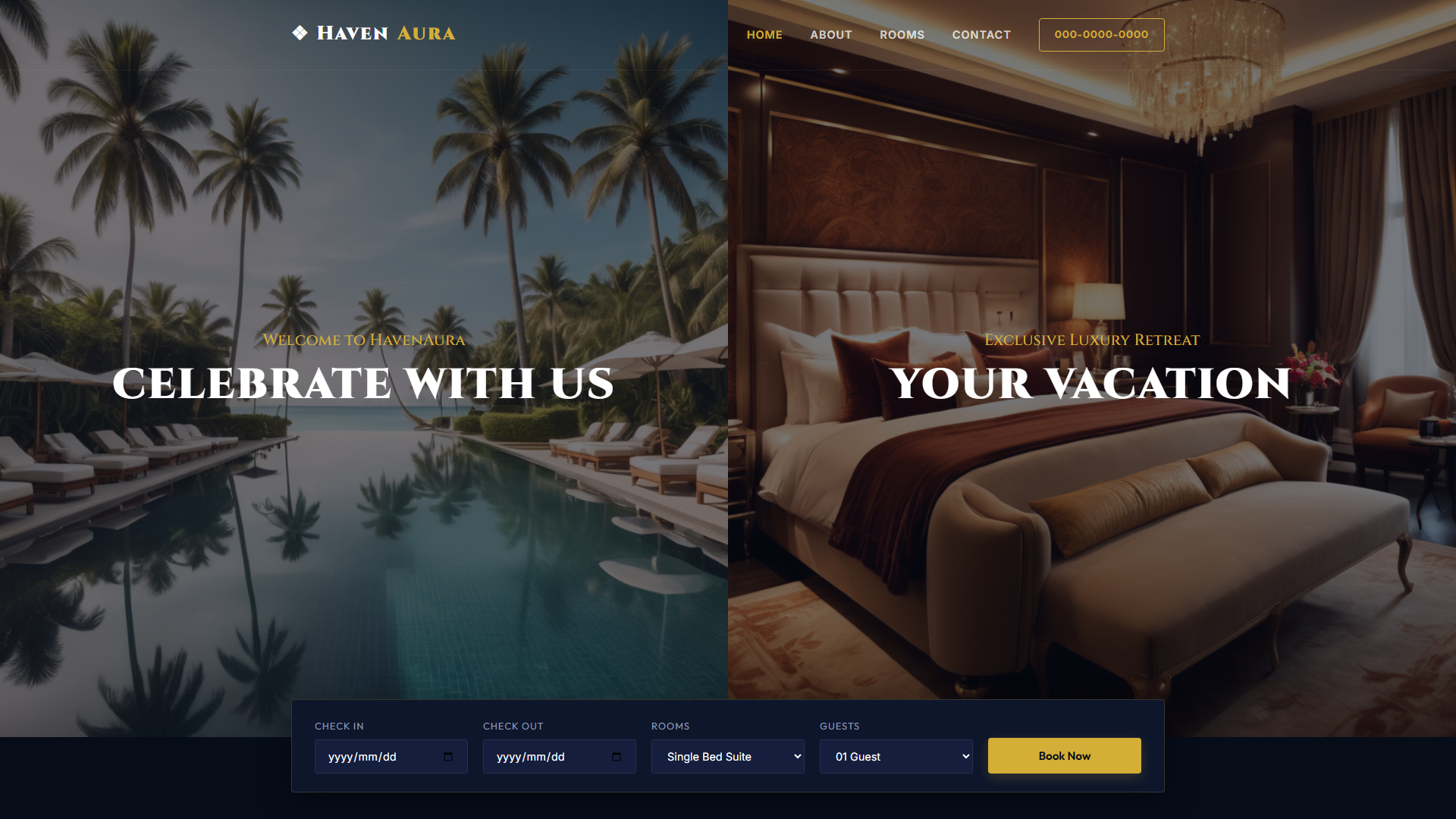
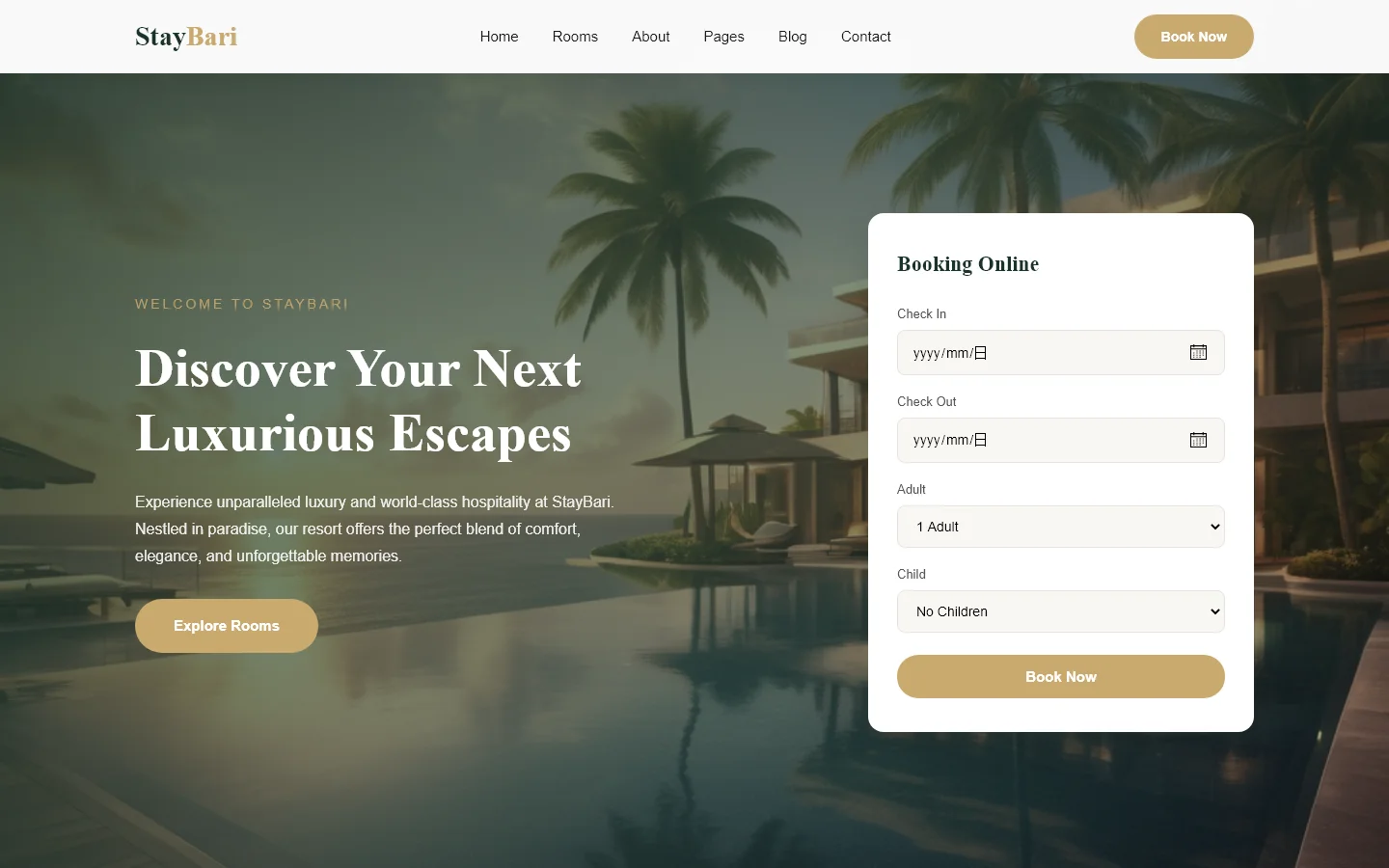
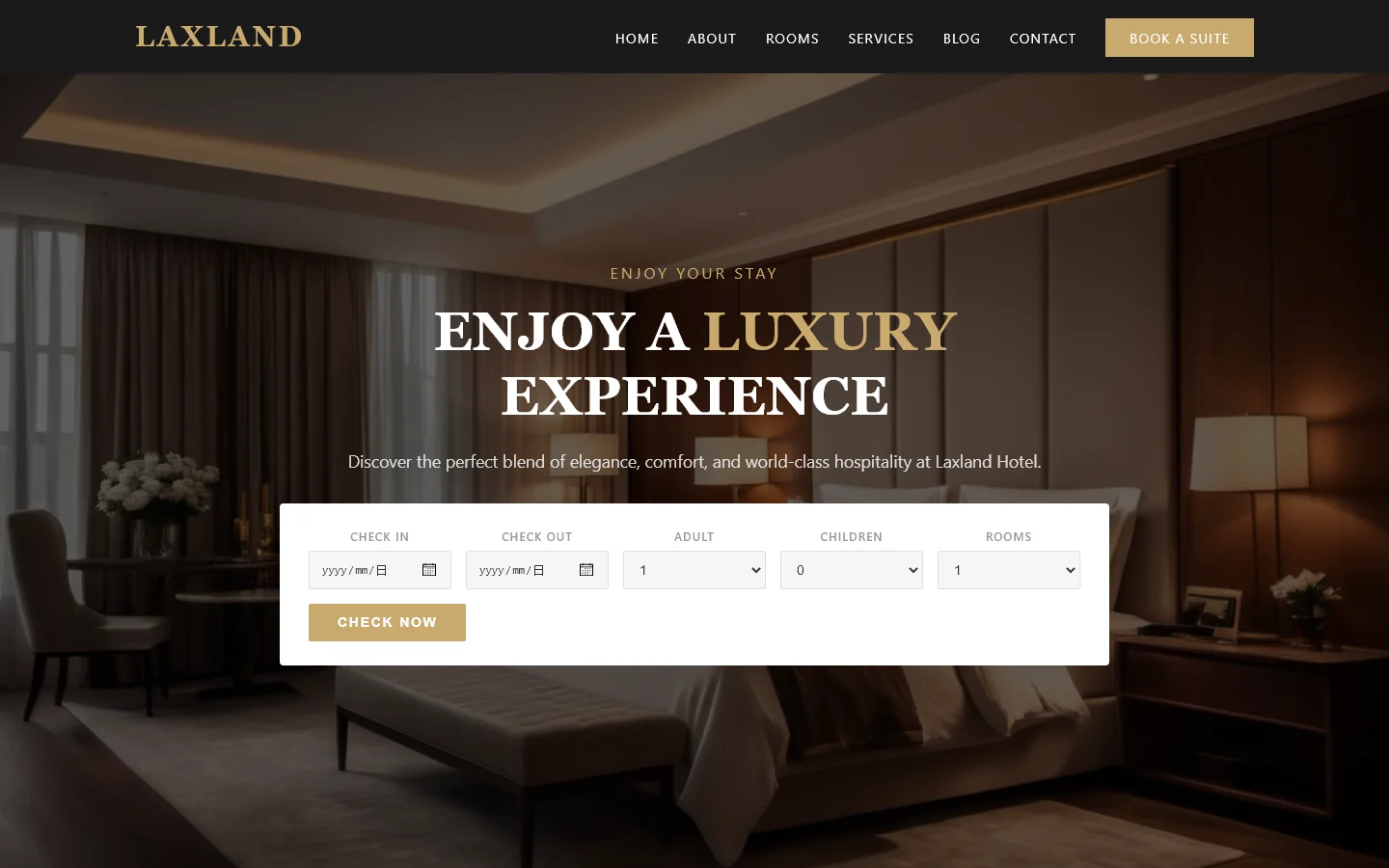
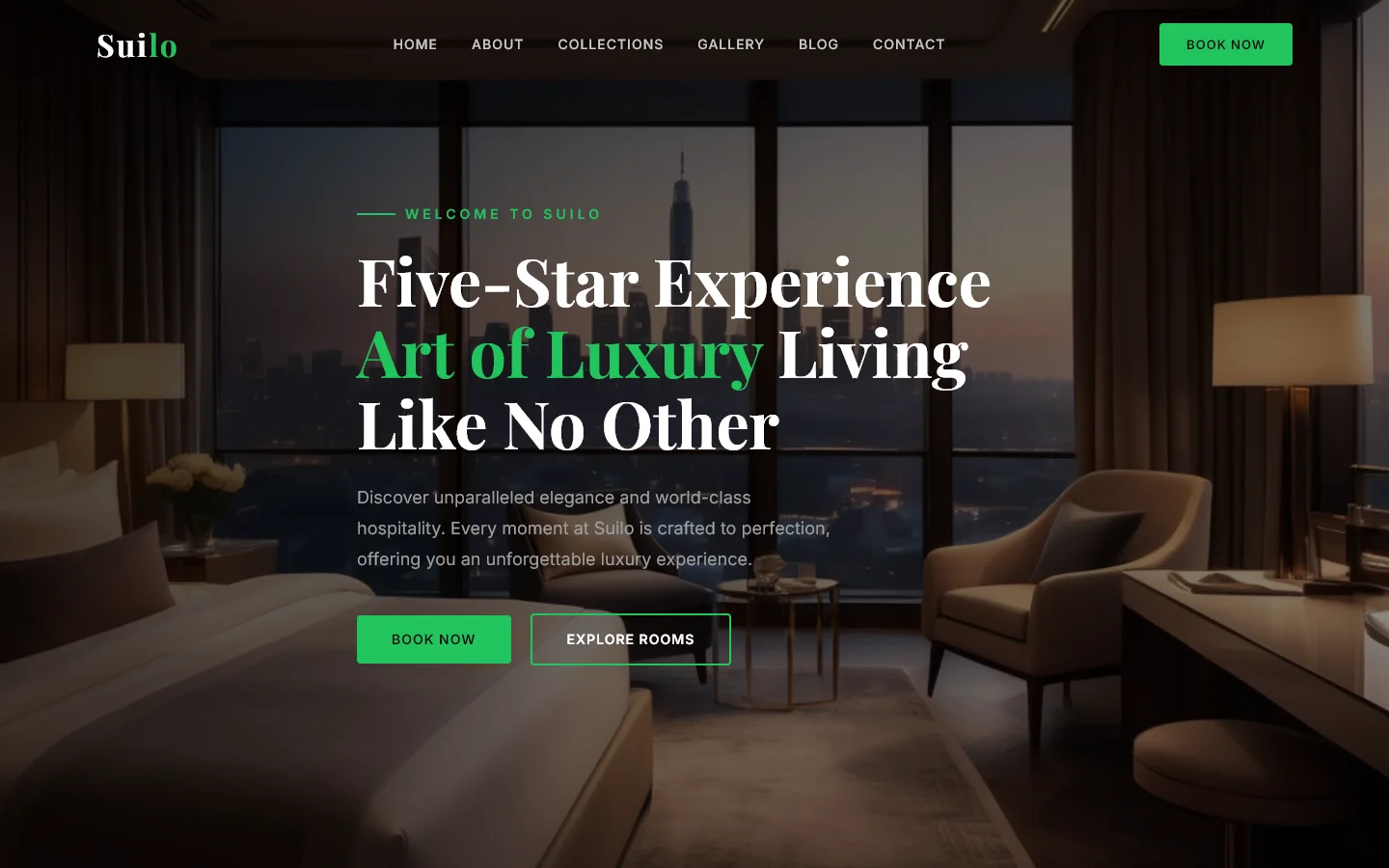
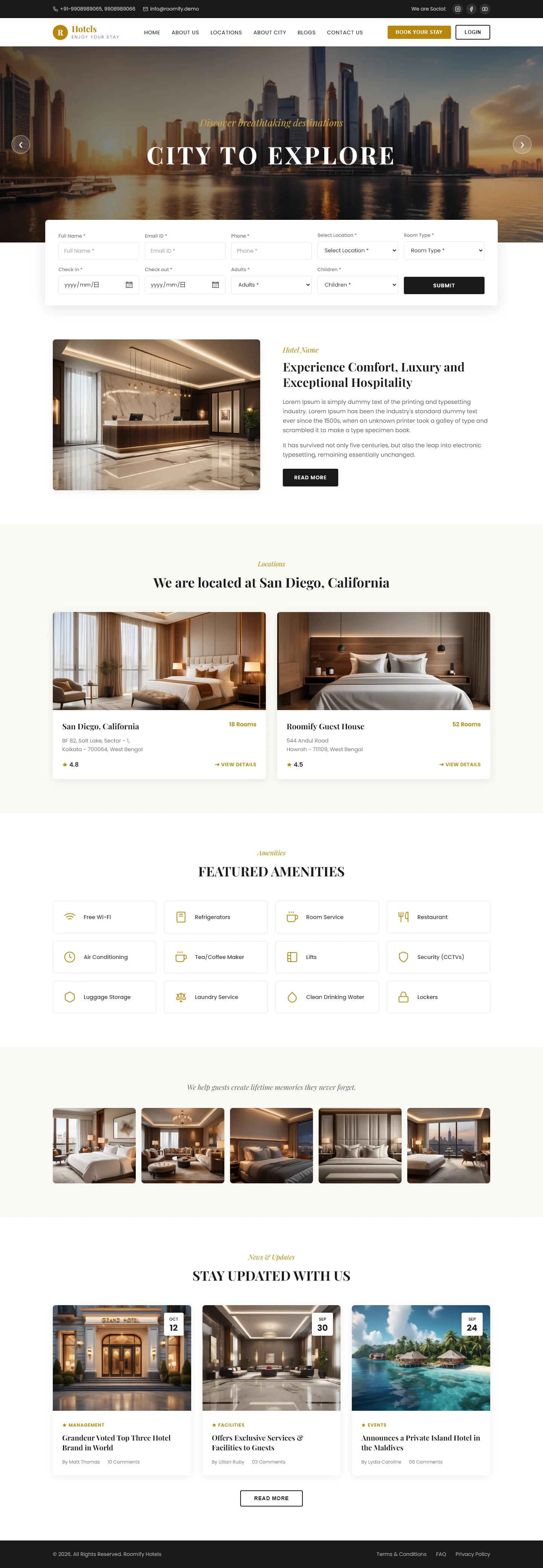
Roomify Hotels is a free HTML template built for hotel and hospitality websites. It includes seven pages covering a homepage, about, blog, contact, destinations, hotels, and a room detail page. The template is powered by Tailwind CSS with hand-written CSS and Google Fonts, and includes a contact/newsletter form for lead capture. It ships with 19 local placeholder images and uses a structured layout with clear section headings for hotels, city guides, amenities, and updates.
Key Features
- Booking Engine Integration
- City Guide Map
- Guest Testimonials
- Mobile-First Layout
| Tech Stack | HTML5, Tailwind CSS, JavaScript |
| Release Date | 2026-07-05 |
| License | Free (Must keep footer backlink) |
Suitable For & Use Cases
Hotel chain designers, boutique resort web developers, and travel agency UI specialists should use this template when launching new property sites or redesigning existing ones. It’s especially effective for urban hotels targeting business travelers during peak season. Not suited for luxury resorts needing highly custom animated experiences or international chains requiring complex multi-language support beyond basic translations.
Page Sections Included
Includes Hero Section with Live Availability Counter, Property Gallery with Lazy-Loading Images, City Highlights Map Powered by Google Maps API, Room Types Comparison Table with Pricing Cards, Guest Review Carousel with Star Ratings, and Booking Form with Address Auto-complete. All sections reflow vertically on mobile breakpoints under 768px, with touch-friendly tap targets sized at minimum 44x44px. Navigation collapses into hamburger menu below 640px width, preserving header visibility during scrolling.
Why We Recommend
This template covers the essential pages a hotel or hospitality business needs without unnecessary complexity. The modular structure makes it straightforward for developers to customize rooms, destinations, and amenities. Its clean, responsive layout works well for properties of any size looking for a practical starting point.
Technical Specifications
Requires Node.js v18+ and npm. Customize colors via tailwind.config.js using hex codes matching brand guidelines. Replace placeholder images with WebP format (under 100KB each) to further reduce payload. Use PurgeCSS to eliminate unused classes in production builds.
Ideal Use Case
Independent boutique hotels and small property managers building a direct booking presence. B&Bs and resort sites needing room showcases, destination pages, and an amenities section. Local tourism boards or destination guides requiring a clean listing layout with contact forms.