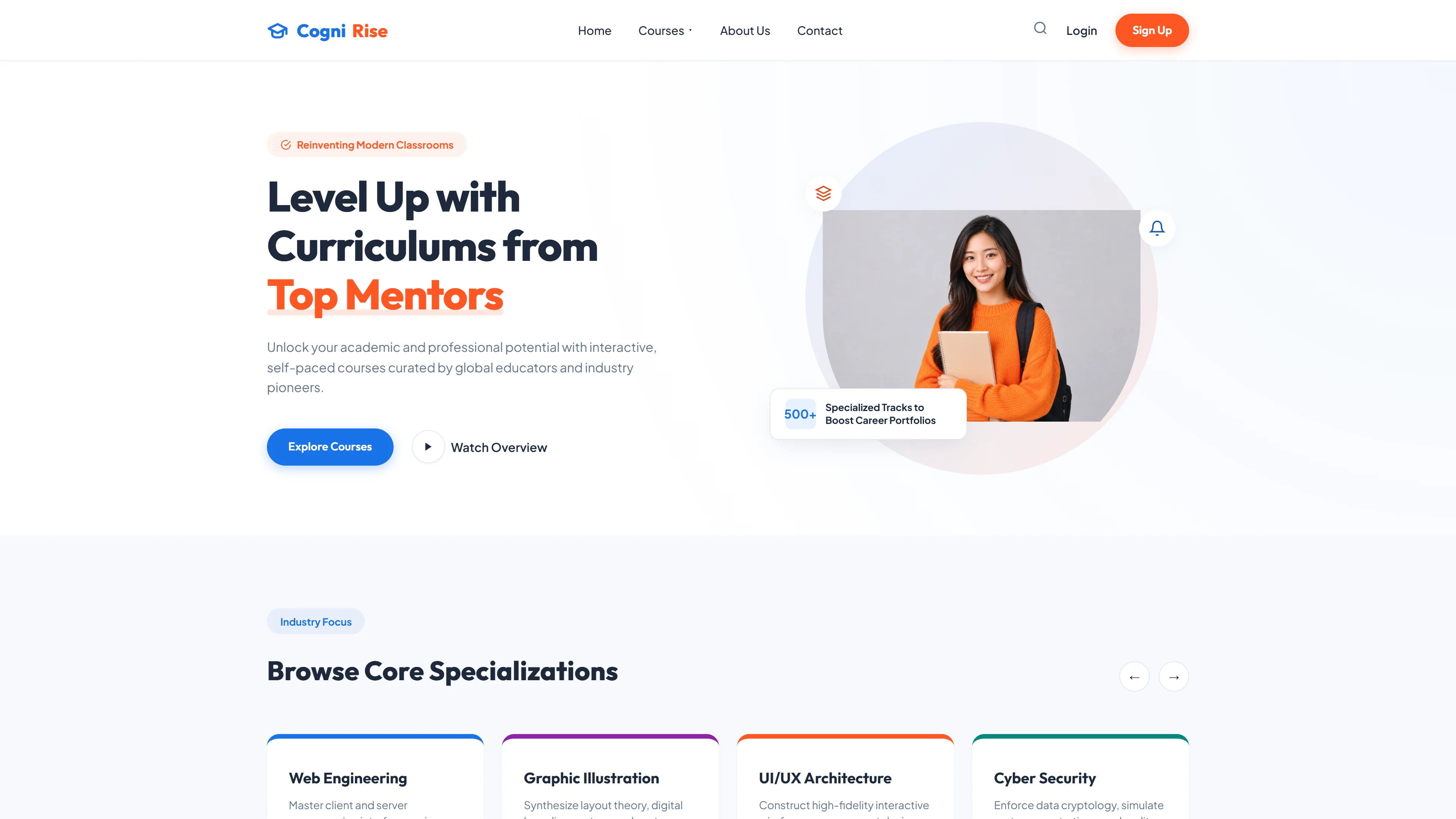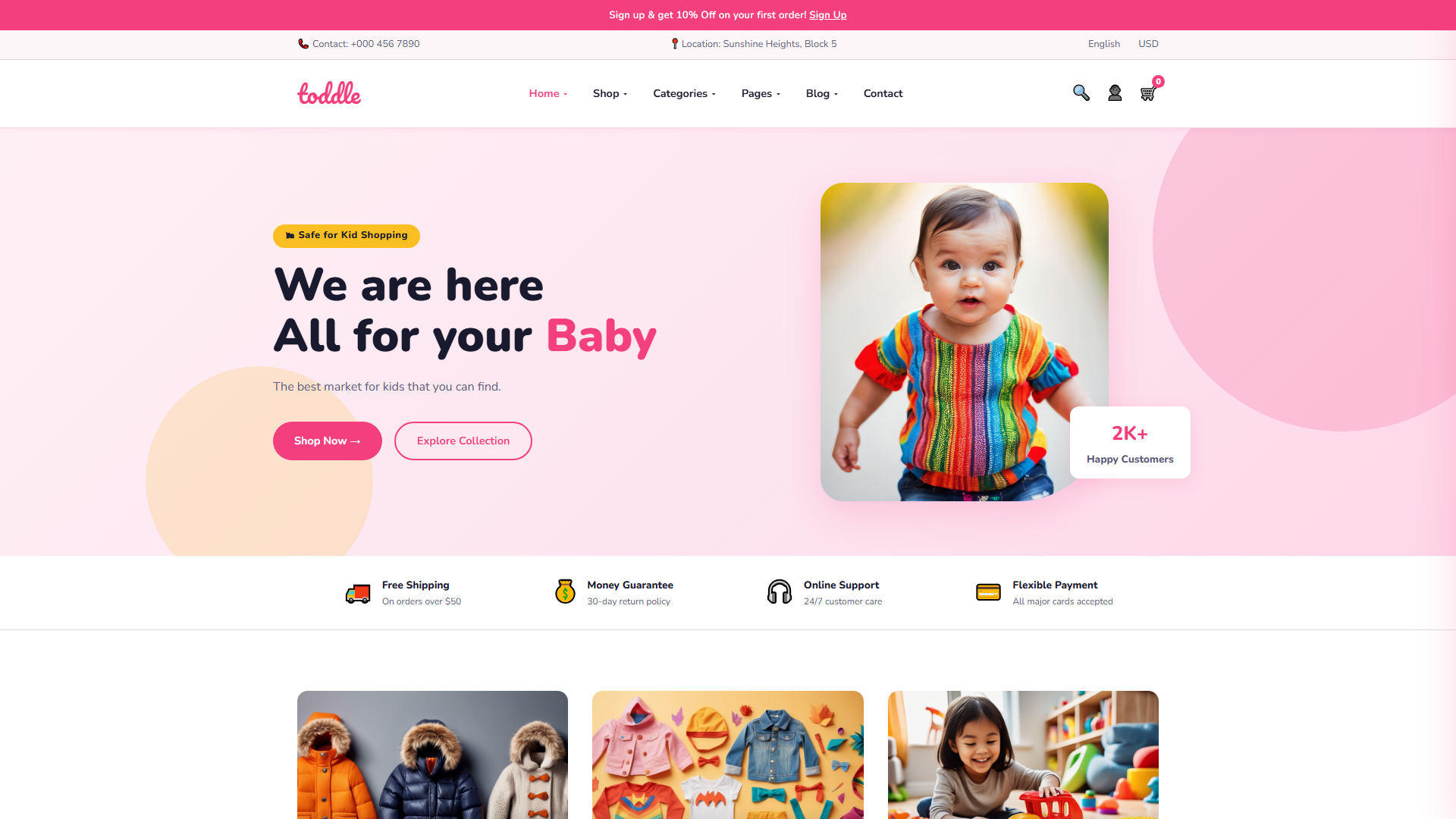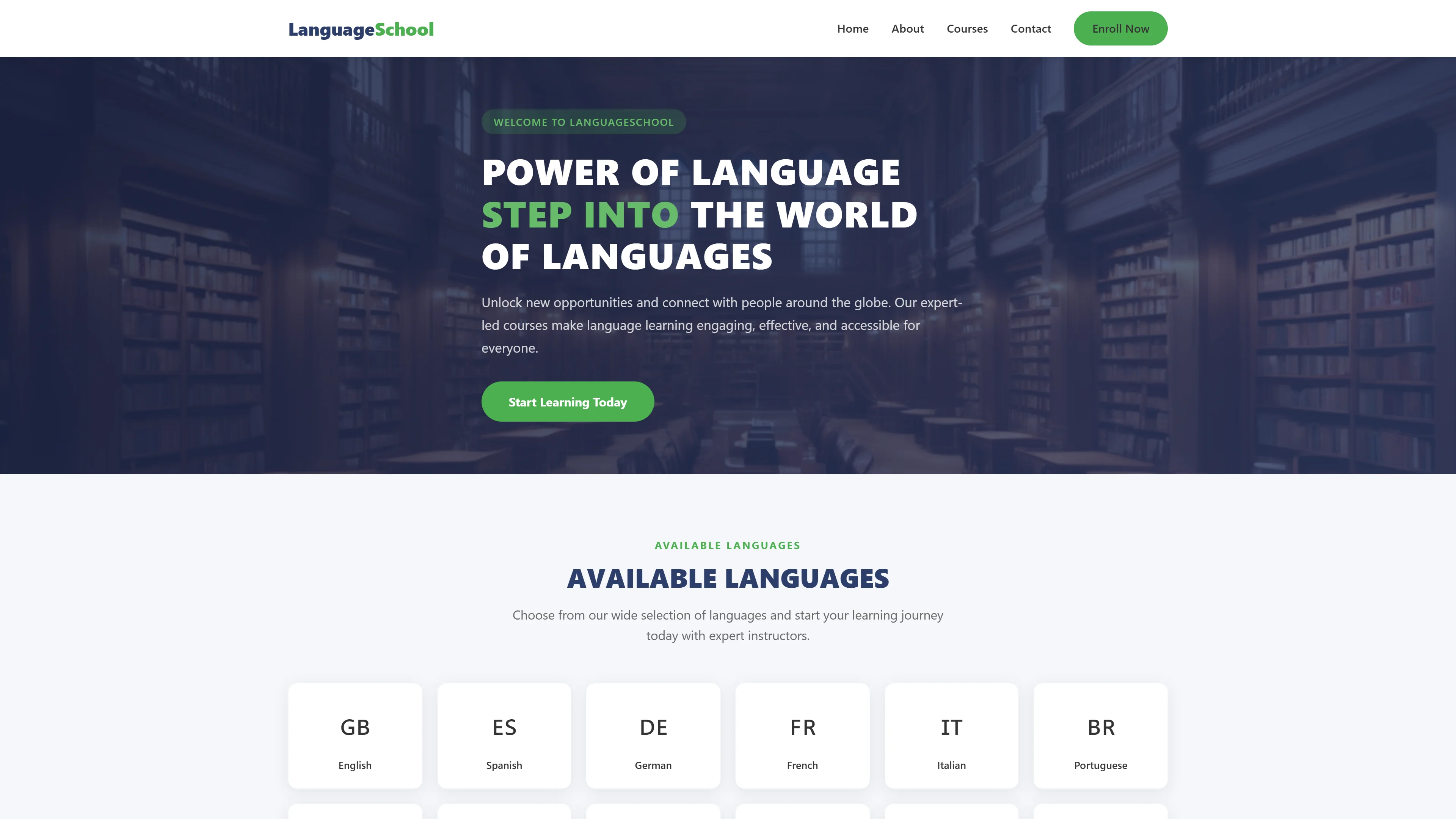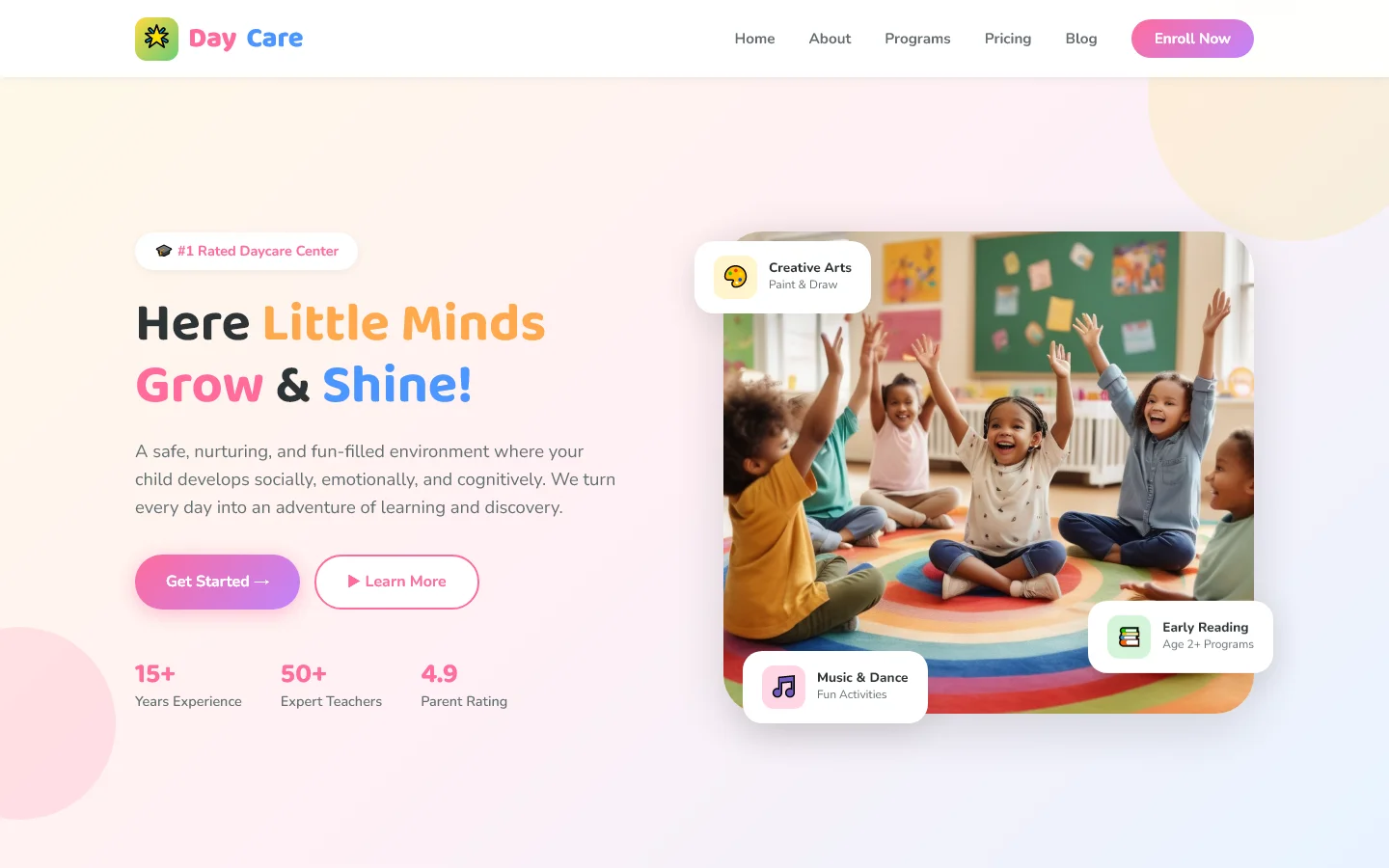
KidMart — Free Education & Kids Website Template
KidMart is a free Education & Kids–themed template built with HTML5, Tailwind CSS, and vanilla JavaScript. It ships as a 5.9 MB package containing seven hand-crafted HTML pages — about, blog, contact, deals, index, kidmart, and products — each using a utility-first CSS approach with no heavy framework dependencies. The only external library included is Google Fonts, keeping the asset footprint lean.
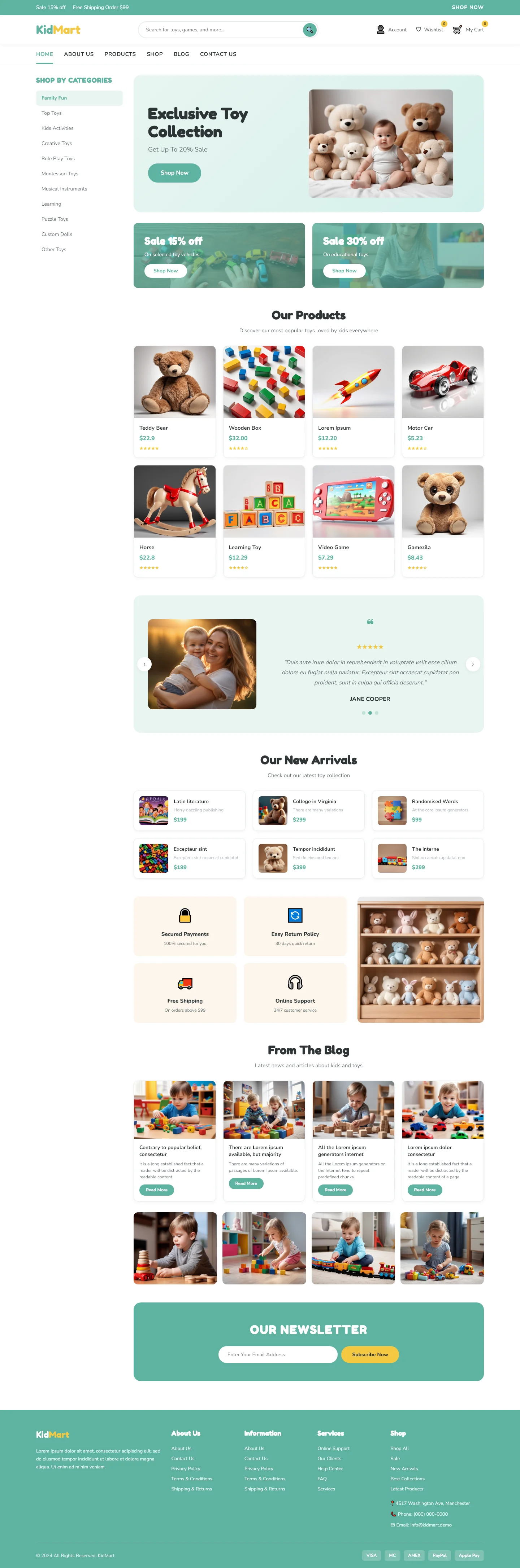
The homepage features clearly sectioned content: an Exclusive Toy Collection area, a products grid, new arrivals, blog entries, and a newsletter capture form. A contact/newsletter HTML form is built directly into the markup, making lead capture straightforward to implement. The template includes 37 local images ready to be swapped with your own assets, and navigation between pages is structured for easy customization.
Key Features
- Toy Collection Showcase
- Educational Toys Section
- Kids Products Grid
- Special Offers Banner
| Tech Stack | HTML5, Tailwind CSS, JavaScript |
| Release Date | 2026-07-05 |
| License | Free (Must keep footer backlink) |
Suitable For & Use Cases
Local toy store owners, after-school program coordinators, homeschooling supply shops, and early ed startups needing a fast-launch site. Ideal for businesses targeting parents aged 28–45 who value trust signals like clear pricing and instant contact options. Not suited for e-commerce platforms requiring Stripe/PayPal checkout or inventory management beyond basic display.
Page Sections Included
The homepage features five prominent sections: Exclusive Toy Collection, Our Products, Our New Arrivals, From The Blog, and Our Newsletter. Additional dedicated pages are provided for about, blog, contact, deals, products, and the main kidmart landing page. The layout employs Tailwind CSS for responsiveness, hand-written CSS for custom styling, and Google Fonts for typography. The package size is 5.9 MB and includes 37 local images.
Why We Recommend
KidMart uses pure Tailwind utility classes and hand-written CSS rather than bloated frameworks, which keeps development fast and predictable. The seven-page structure covers the essentials most kids' stores and education sites need out of the box. With no jQuery or custom JS overhead, developers can edit files directly in any code editor and deploy quickly without installing a build toolchain. The inline newsletter form supports immediate lead capture without third-party integrations. Google Fonts is the sole external dependency, reducing request count and load complexity. Local images are already included so the template looks complete immediately after extraction, while the seven-page layout gives publishers room to grow without restructuring the site.
Technical Specifications
Node.js v18+ recommended for Tailwind CLI builds. PostCSS available for optional preprocessing. Customize colors and spacing through tailwind.config.js. Deploy on Netlify or Vercel with automatic gzip compression. Interactions rely on native JavaScript and class toggling; custom JS should be avoided unless necessary. Google Fonts requires an internet connection at runtime. The project contains 37 local images and hand-written CSS alongside the Tailwind utilities, so editors should review both before modifying styles.
Ideal Use Case
Independent toy retailers launching a seasonal online shop — particularly around back-to-school or holiday periods — can drop this template into Netlify or Vercel and start publishing products within hours. Regional Montessori or homeschooling cooperatives can use the blog and deals pages to share curriculum updates alongside product listings. Community play centers organizing weekend workshops can repurpose the contact form for registration. Libraries running children's reading programs can adopt the newsletter integration to collect parent emails. The multi-page layout supports a small editorial team that wants to maintain content across a blog, about page, and product catalog without relying on a CMS. Because it runs on plain HTML, the template works equally well on shared hosting, static CDNs, or local intranets where complex frameworks are impractical.