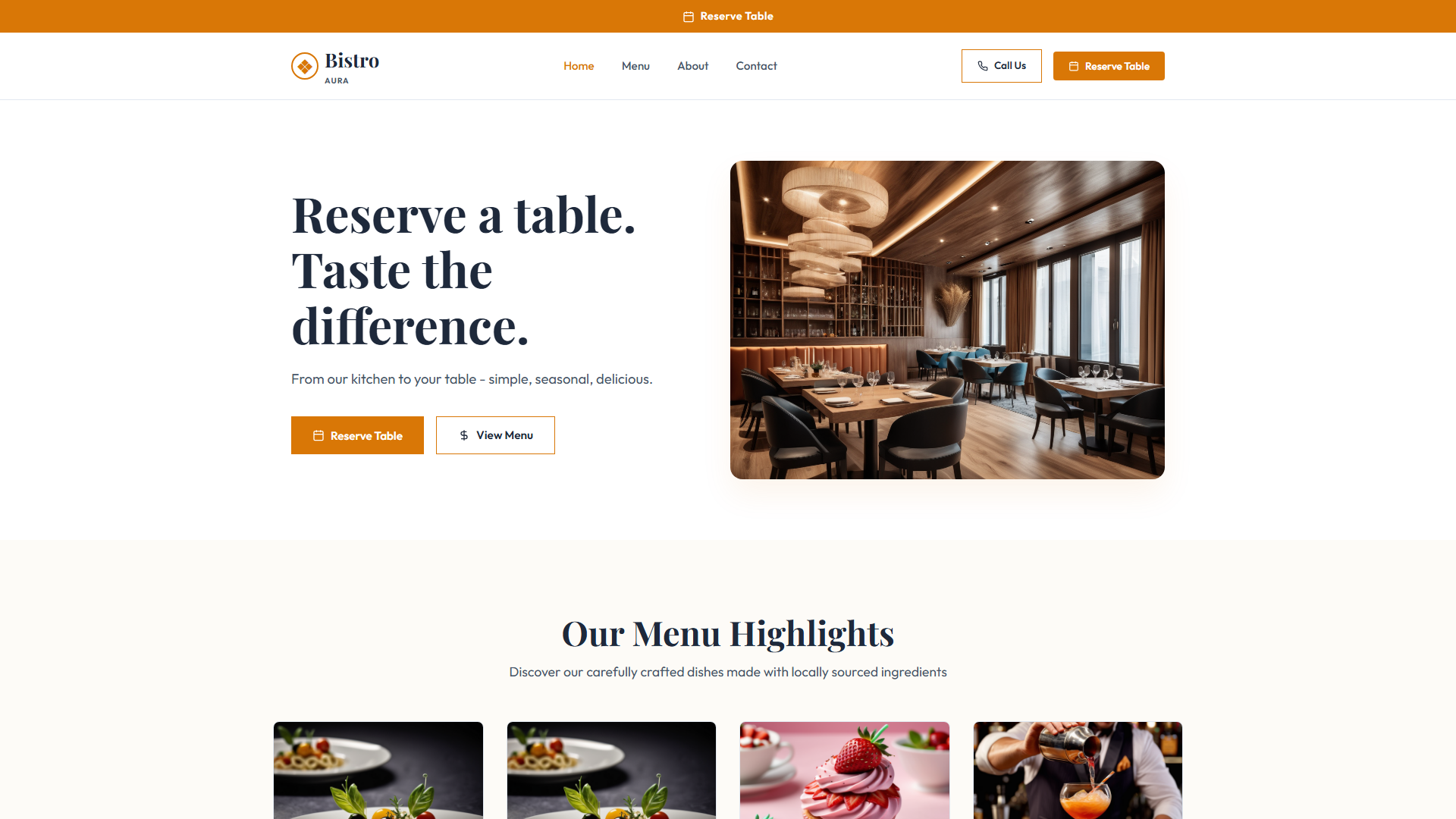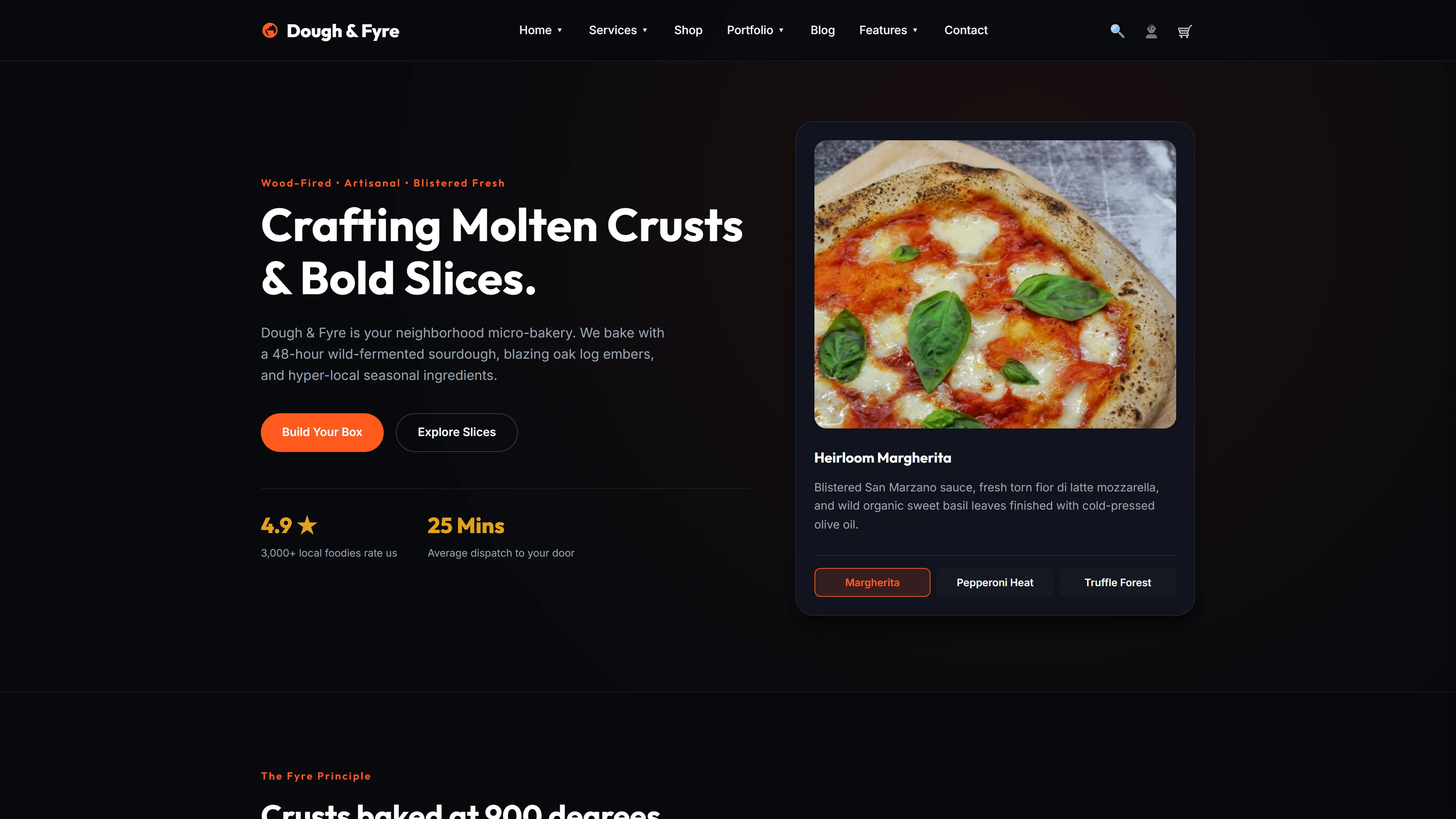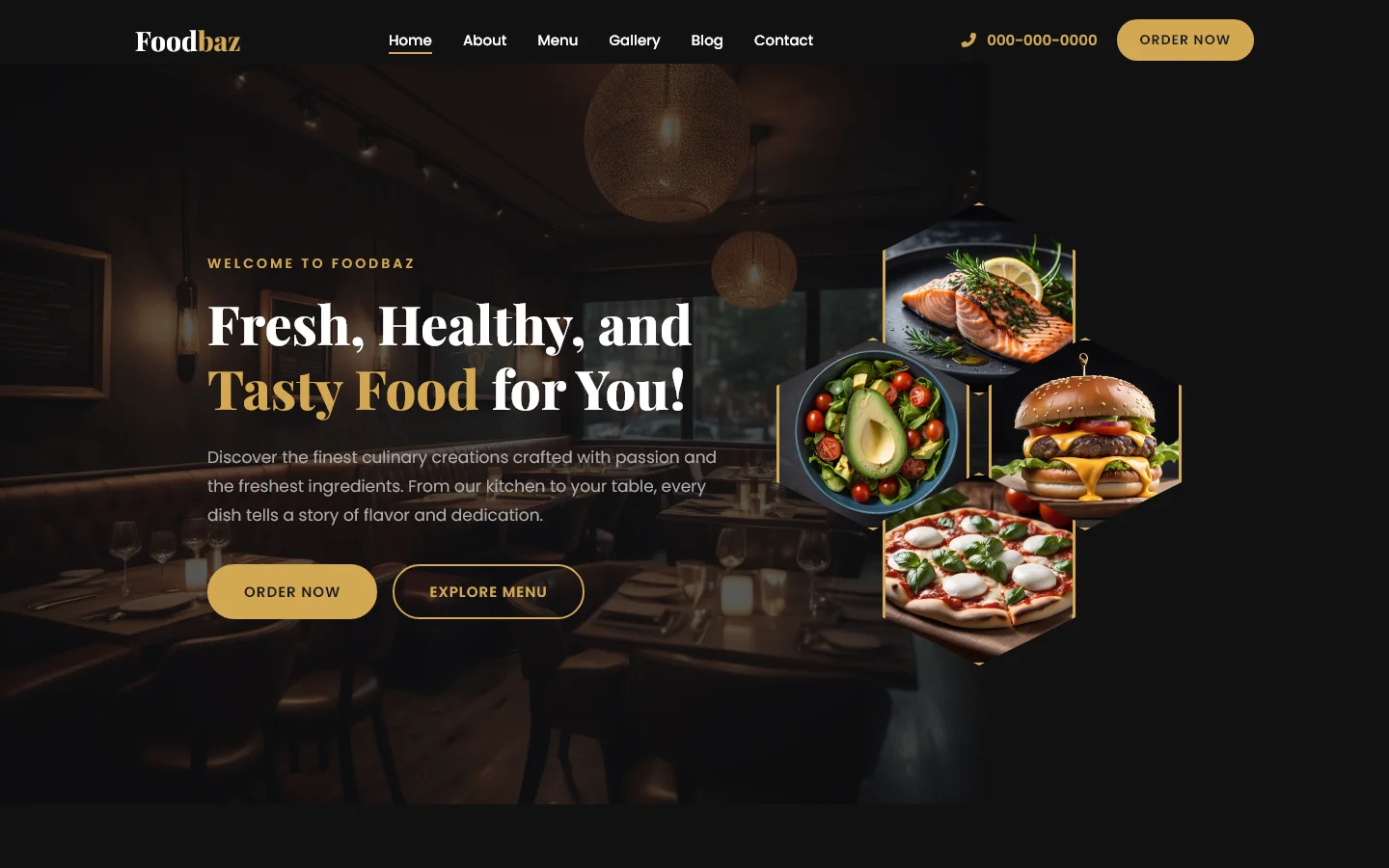
Gastronoir — Free Restaurant & Food Website Template
Gastronoir is a free HTML5 restaurant template built with Tailwind CSS and hand-written custom styles, distributed as a 5.8 MB package. It ships with five standalone pages — index, about, menu, reservations, and contact — each designed for a modern food business. The layout follows a mobile-first structure with defined breakpoints, ensuring responsive grid behavior across small and large screens.
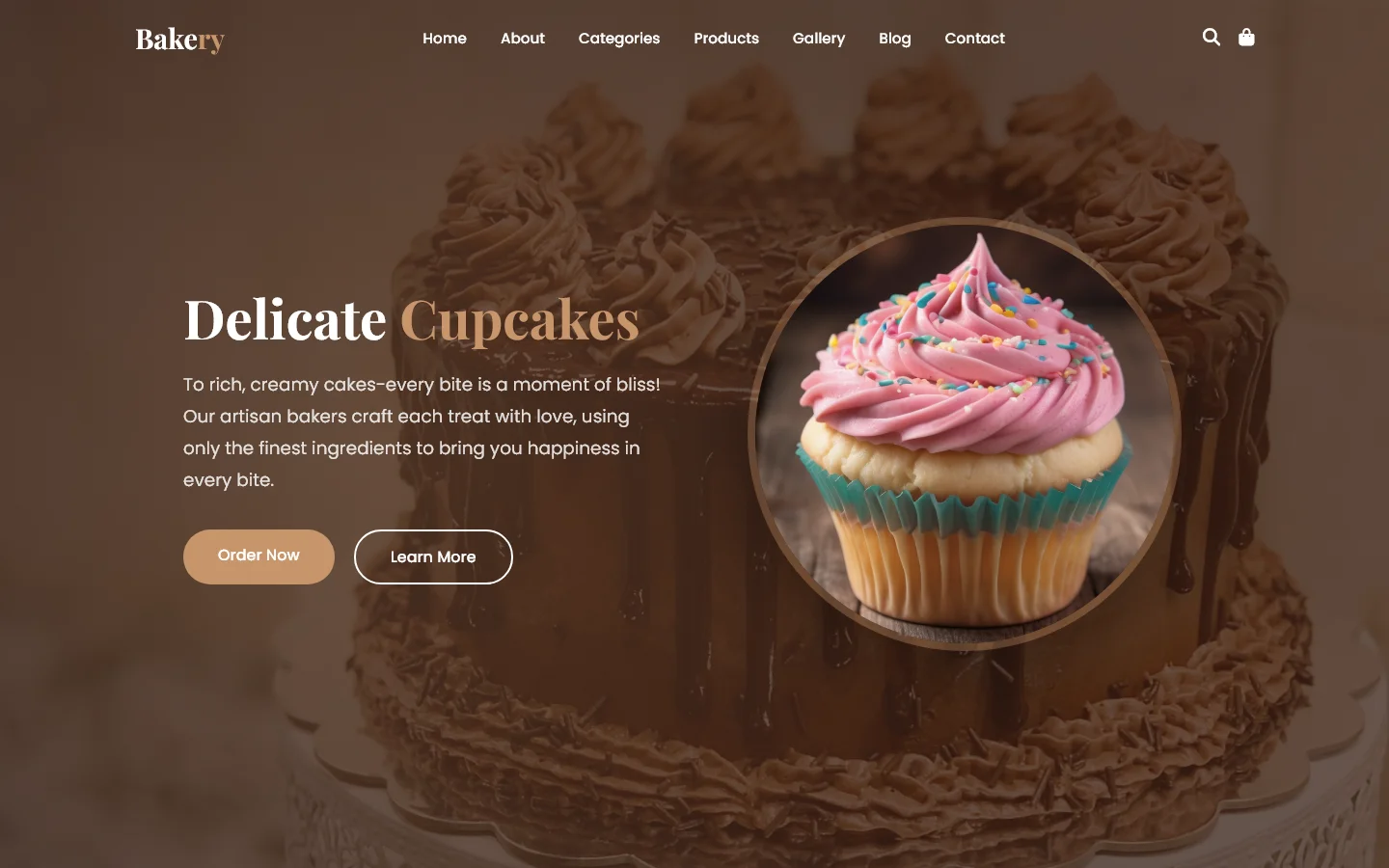
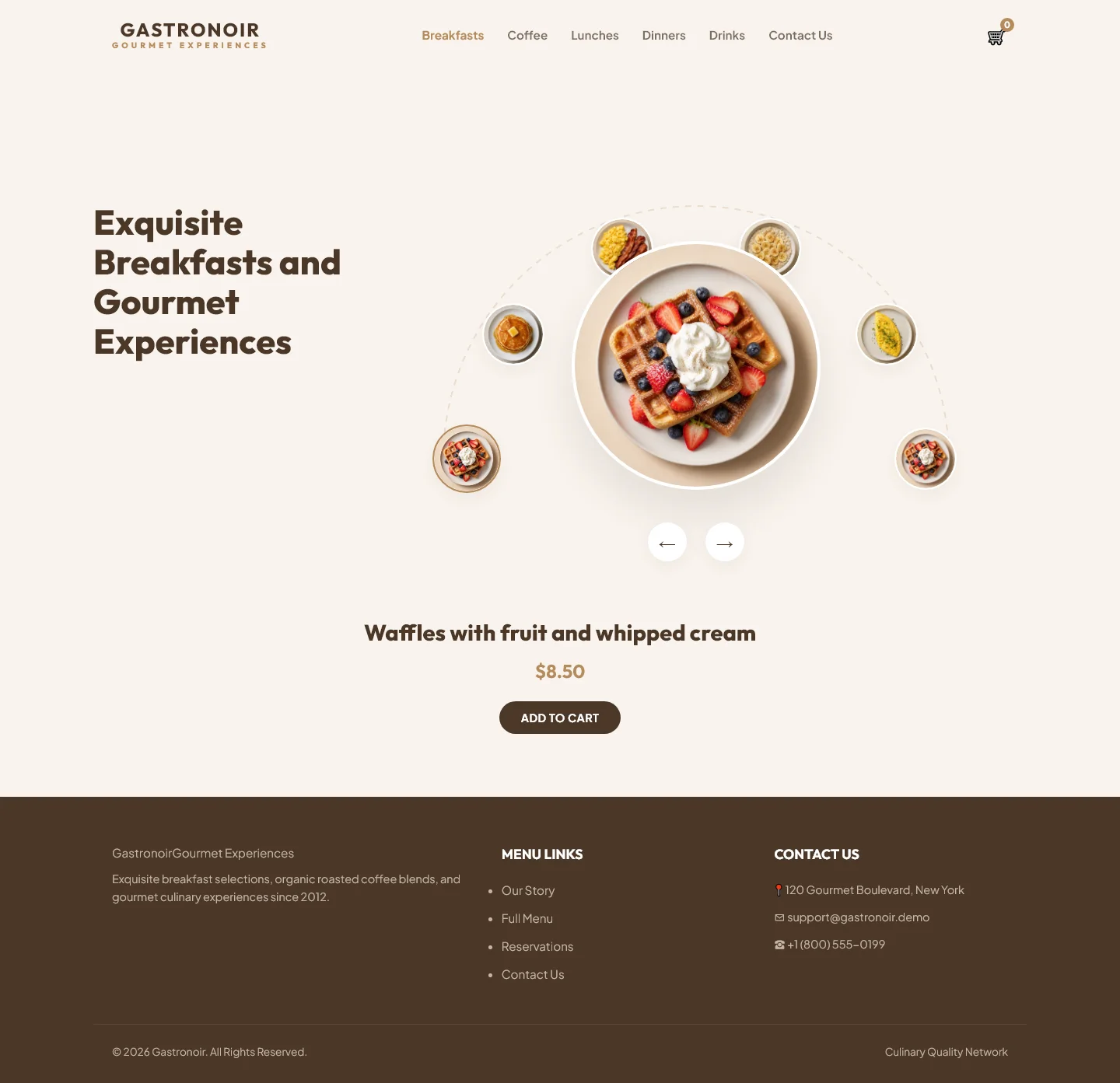
The homepage highlights key content areas such as breakfast offerings and gourmet dining experiences. All local images are self-hosted, and an HTML contact/newsletter form is included for lead capture. No third-party animation libraries are used, keeping the JavaScript footprint minimal and the source easy to modify. A reservations page provides a dedicated booking flow, while the menu page gives clear spatial organization for food listings.
Key Features
- Gourmet Breakfasts
- Artisan Coffee Blends
- Seasonal Lunch Menus
- Luxury Dinner Packages
| Tech Stack | HTML5, Tailwind CSS, JavaScript |
| Release Date | 2026-07-05 |
| License | Free (Must keep footer backlink) |
Suitable For & Use Cases
Freelance web designers building client sites for local cafes, food bloggers launching portfolios, or small restaurant owners needing a quick launch. Not suited for enterprise chains requiring complex CMS integrations or e-commerce product catalogs.
Page Sections Included
The Gastronoir template features an index.html landing page with hero and menu sections, a dedicated menu.html page for displaying food offerings, an about.html section, a photo gallery with lightbox, a reviews area, and a contact form. It also includes reservations.html for booking functionality. All five pages use hand-written CSS with responsive behavior and native HTML form validation.
Why We Recommend
Gastronoir removes visual clutter while maintaining a premium restaurant aesthetic. The absence of animation libraries means faster page loads and simpler maintenance for developers. Hand-written CSS paired with Tailwind utilities makes it straightforward to customize colors, spacing, and typography. The five-page structure covers essential restaurant needs without excess, making it practical for small teams deploying quickly.
Technical Specifications
Requires Node.js 18+ and npm for the Tailwind build process. Customize theme colors and spacing through tailwind.config.js. Use PostCSS if additional processing is needed. Recommended editor setup includes VS Code with Tailwind CSS IntelliSense for accurate autocomplete and utility hints.
Ideal Use Case
Independent cafes, food trucks, and boutique bakeries can deploy this template using their own branding and dish photography. A coffee shop could swap the local images for product shots, update the menu.html with current offerings, and embed a Google Forms or Typeform into the contact area. A pop-up dinner series could use the reservations page to collect event sign-ups directly.